
Mechanically stripped fibre loses up to 98% of its breaking strength. Here’s why — and what to use instead when a splice has to last.
The problem with mechanical stripping
A fibre-optic cable’s coating isn’t just insulation — it’s what protects the glass core from the microscopic surface flaws that turn into a break under tension. A mechanical stripper shears that coating off cold, dragging a blade across the glass. Any flaw the blade introduces into the fibre’s surface stays there permanently, and it’s invisible to the naked eye. The fibre can look, cleave and splice exactly as well as undamaged fibre, right up until it’s put under real-world tension — in a cable run, a splice tray, or simply being handled during installation.
How heat stripping works
A heat stripper warms the coating with a heater plate first, softening it before a motorised stage draws the fibre through. Because the coating comes away softened rather than sheared, the glass underneath sees far less mechanical shock, and far fewer of the surface flaws that cause premature breaks.
The data: tensile strength compared
Independent tensile testing (35 mm strip length, standard singlemode fibre, 60 mm/min crosshead speed, tested at the Korean Photonics Technology Institute) puts real numbers on the difference:
Source: independent tensile testing, Korean Photonics Technology Institute. 1 kgf = 9.80665 N.
Where it matters most
Strip strength isn’t a concern on every job — but it’s the deciding factor on any splice that has to survive stress, vibration or years of unattended service:
Opticus equipment for heat stripping
Both of our fibre strippers use a heater plate and motorised stage rather than a cold blade, with adjustable heat time and temperature to suit the fibre being prepared:


Pair it with a precision cleave
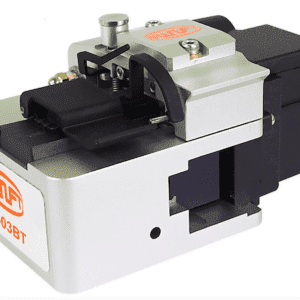
A good strip only holds if the cleave afterward is just as clean — see our cleaver range:

Fibre Masterclass Note 20 — for printing or offline reference
Need the right stripping tool for your splice?
Tell us what you’re splicing and we’ll recommend the right setup.